Tuesday, April 9, 2013

Cairo, Day 984: Super Aziza

Interesting stuff going on in Ecuador

Combine
this guardian article
–which explains some of the positive changes that Ecuador has been experiencing in the past 6 years–

with
this Planet Money podcast
about an innovative way of preventing oil extraction (and the destruction of) the rainforest (setting up a fund where countries pay so Ecuador NOT extract its oil, 350 million USD so far)

and
you start to see that Ecuador has some pretty interesting things happening to it. Maybe this has to do with the fact that it's president is a UIUC economics graduate! :-)

Looks I picked the wrong country to study abroad in 4 years ago...

Monday, April 8, 2013

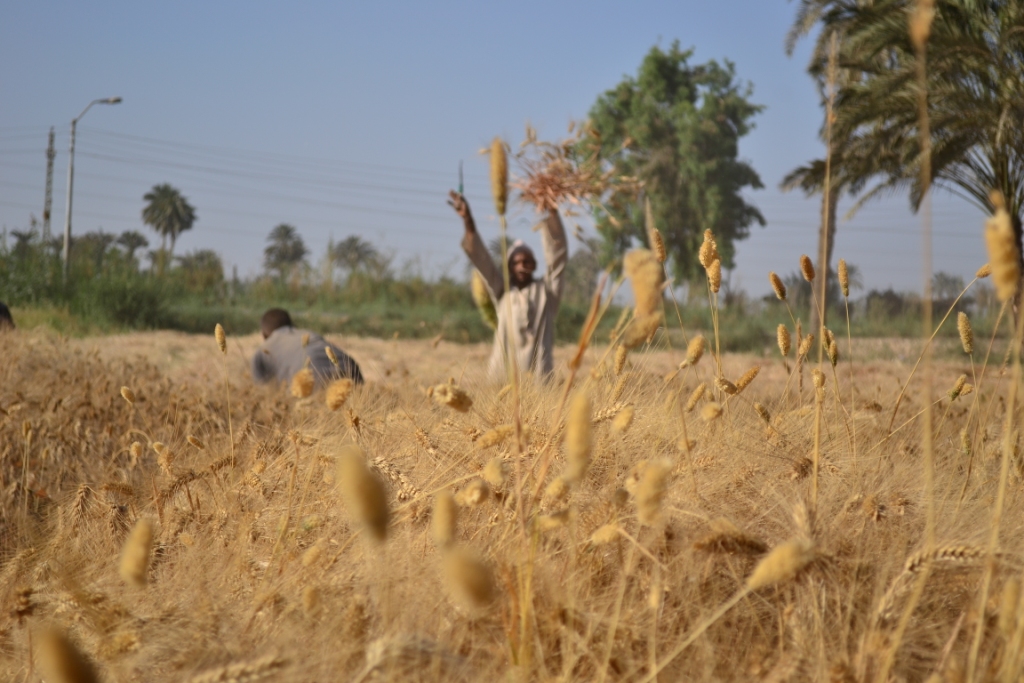
Photo Essay: The Harvest


All photos and text by Ahmed Safyeldin (twitter: @ElKharouf)


It was in my town of Ahnasya-El-Khadra, in the governorate of Beni-Suef, that the subject matter of his photo essay presented itself. I went on a Friday morning to volunteer at an NGO oblivious that the countryside was being strangled by a severe gas and diesel shortage. I had to put aside my plans to return on the same day and spend the night with a relative. As my relatives made phone calls around town to fetch me gas off the black market, they expounded on the adverse effects of this crisis on their livelihood, especially since the wheat harvest is coming up and the process of harvesting is mechanized. These revelations stirred my imagination since wheat is a staple of Egyptian diets and the Nile Delta was one of the first places that domesticated wheat 9,000 years ago.


The wheat harvesting process begins in early May by reaping the wheat and leaving it out to dry for a day or two on the field. Then the wheat is bound together and put through a machine that threshes (loosens the head of the grain from the chaff) and winnows (separates the head of the grain from the chaff) it. Finally the cereal is hauled away in sacks to the town’s market or government storage centers.


I photographed two locations at different stages of the harvest. The first location was a farm owned and operated by a single family that was at the stage of binding, threshing, and winnowing the wheat. The mood was joyous, welcoming, and put me at ease right away. I sat by an old lady (a great grand-mother) making  tea in a blackened beat up pot using corn cobs as fuel. The old lady went on to tell me how easy farm life had become compared to when she was young and the harvesting process was done by hand. The most interesting stages were threshing and winnowing, which began by passing a special cart over the wheat to loosen the grain from the stalks and husks. The mixture was then winnowed by throwing it into the wind so the chaff flew away and the heavier grain fell to the ground.


The commercial farm was owned by a distant relative of mine who contracted a foreman to provide manpower during harvests. Interestingly, the group of peasants that worked for the foreman was an extended family. While sipping on a cup of sweet tea brewed over a gas stove in the middle of a reaped field, the farm owner informed me that these workers are a group of nomads that roam between farming communities providing labor and are infamous for committing petty crimes. He also went over modernity’s impact on the farmer and how it strained his resources. The advent of government provided utilities gave the farmer the opportunity to buy electrical appliances and goods that burdened them financially. In addition, farming subsidies such as seeds and pesticides are stolen by government officials and sold on the black market for higher prices to the farmers who have no choice but to buy these products.


I went to Ahnasya-El-Khadra to witness a thousand year old agricultural tradition that captured my imagination, but found reality quite different. The fact is that the Egyptian peasant’s life has been far from idyllic since the beginning of time. However, it is fair to say that materially this is the richest he has been. But what does that translate into? Does that count as improvement?


Sunday, April 7, 2013

Army Selling off their non-military Corporations??? shock and disbelief.


WHAYT??? the Americans are doing something USEFUL for Egypt for once??? I can't believe it...

If this is true, then it's a VERY good step in the right direction for Egypt.

"But there’s more to it. The Americans have started considering a new barter tactic if the Egyptian military want their continued aid. There’s talk of SCAF divesting significant parts of their non-military corporations: the pots and pans manufacturing plant; the Wataniyya petrol station network; Alexandria Shipyard that produces merchant vessels and warships and offers its repair services to private shipping companies, and the General Egyptian Company for Railway Wagons and Coaches."

Quoted from this Daily News Egypt article.

Cairo, Day 983

Today –Saturday– was a good day.

Four different girls felt the need to touch my soft short hair :-)


Dokki Metro Station. My favorite exit.


Some downtown graffiti. Notice "Gika" in the bottom right, he'll appear again further down.

I finished reading "A Short History of Tractors in Ukranian". Very fun book.


I went to book club. Today we talked about "Black Faces, White Masks" and "the Yacoubian Building" as well as the general "otherness" theme.
Yacoobian Building style. See the boy, the old lady, and the two girls?

BookClub-goers admiring the view

Then I hung out with Namaai kids at Makan for an open mic and a discussion on two short movies. All in Arabic, I could understand almost everything.


حب عميق


After that, had the regular kofta sandwich in dokki sq. Now back home, organizing photos and this week's lovely blog posts by Safy :-)

RIP Gika, whoever you are.

Friday, April 5, 2013

SnapShot: Cat Proctor

"You know you're in Cairo University when a cat is helping you proctor mid term exams" :-) Thank you E.G.

Thursday, April 4, 2013

Da Gud Life, according to Epicurus

I discovered a BBC podcast a few months ago. It's called "In Our Time" and basically, every week, they invite some scholars on a certain topic and talk/inform about it. It's a good podcast to listen to if you want to fall asleep... :-) But also interesting if you're awake.

So, I was listening to a podcast about Epicureanism, and found one passage in particular to be very interesting:

21:20 : If you're not hungry, thirsty, or cold, then you are in a state of "static pleasure". And what most people think –quite incorrectly according to Epicurus–  is that you can further enhance that state by adding luxuries: if you had enough to eat... if you have a box of chocolates as well, then most people would think you've added an extra pleasure –a kinetic pleasure (or pain)– and that increases total pleasure." Not so" according to Epicurus. What the additional pleasures do (glass of wine or chocolate after dinner) is vary your state of pleasure, but they don't actually increase it. e.g. "being rich doesn't make you happy, it just enables to you to be miserable in comfort".

Actually, the heigh of pleasure is achieved when all the pain is gone. He claimed that this is a "pleasant state". So, pleasure isn't derived from accumulation of kinetic pleasures, it's obtained when all the pain is gone.

That was about bodily pleasures, and they teach us the nature of pleasure and pain...

...But mental pleasures are the ones that are really important. Mental pleasures are superior, because with your mind, you can enjoy all your past pleasures, and look forward to new ones. The mind is a much more powerful source of pleasure than the body. Mental painlessness is the best possible state you can achieve. Get rid of all the fears you have: the fear of God, the fear of death, any fear of pain, any other fears, then you are in the highest state of pleasure. That is really the essence, or the basis from which he develops his account of "da gud life".

So basically, I'm going to go to sleep now and force my mind to have a dream that will be far more entertaining than even the best movies. And then I'll reminisce on that wonderful memory. :-)


The section around 26:40 about friendship is also pretty interesting.

Epicurus
More information, copied and pasted from the IOT website:

"...discuss Epicureanism, the system of philosophy based on the teachings of Epicurus and founded in Athens in the fourth century BC. Epicurus outlined a comprehensive philosophical system based on the idea that everything in the Universe is constructed from two phenomena: atoms and void. At the centre of his philosophy is the idea that the goal of human life is pleasure, by which he meant not luxury but the avoidance of pain. His followers were suspicious of marriage and politics but placed great emphasis on friendship. Epicureanism became influential in the Roman world, particularly through Lucretius's great poem De Rerum Natura, which was rediscovered and widely admired in the Renaissance."


http://www.bbc.co.uk/iplayer/episode/b01qf083/In_Our_Time_Epicureanism/